TransPennine Express and Northern New Trains: The Complete Guide to the Rolling Stock Tenders
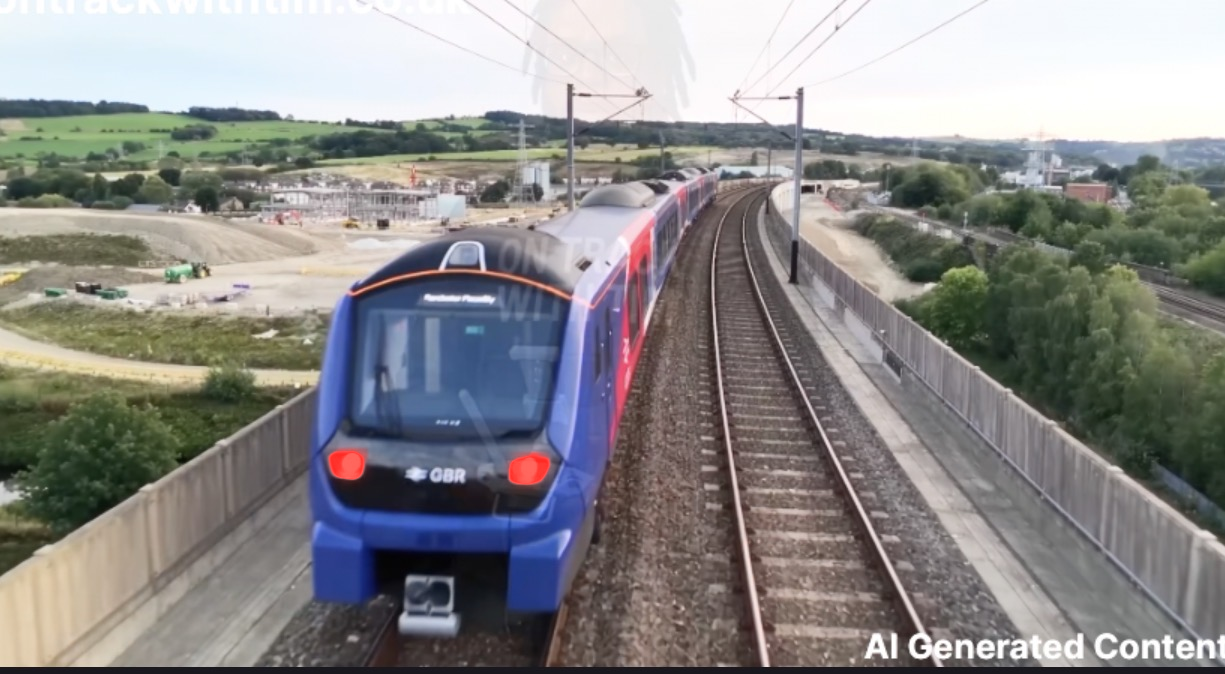
In our previous article, Decoding the Timetable, we explored how the Transpennine Route Upgrade (TRU) is expected to reshape rail services across the North of England. We looked at why future working timetables increasingly reference “new trains” and how those future diagrams could transform services between Liverpool, Manchester, Leeds, York, Hull and beyond.
Naturally, that leaves one big question.
What are these new trains, and who will build them?
Part of that question has now been answered.
In September 2026, the Department for Transport confirmed that Alstom had secured the contract to build a new fleet of battery-electric trains for TransPennine Express. However, the announcement revealed something many enthusiasts may not have expected. Rather than replacing the entire Class 185 fleet, the new trains will replace only part of it.
Sixteen Class 185s will remain in service, continuing to operate the Liverpool Lime Street to Cleethorpes route, where long stretches of railway remain without overhead electrification. The remaining Class 185s will be withdrawn as the new battery-electric fleet enters service over the coming decade.
That decision perfectly illustrates the challenge facing modern railway operators. There is no single train capable of solving every operational problem, and infrastructure improvements rarely happen everywhere at once.
While the TransPennine Express competition has now reached its conclusion, Britain’s largest rolling stock competition is still very much underway.
Northern Trains is preparing to replace its ageing Class 150, 155 and 156 fleets with hundreds of new vehicles, creating one of the biggest regional train procurements seen in Britain for a generation.
Although one competition has now been decided and the other continues, they share an important connection. The same five international manufacturers competed for the TransPennine Express contract and remain in contention for Northern’s future fleet.
Understanding those manufacturers, the train platforms they have developed and why one ultimately secured the TPE contract provides a fascinating insight into how Britain’s next generation of trains is being selected.
In this guide, we’ll examine each manufacturer, explore the train platforms they are expected to have offered, explain why Alstom emerged victorious for TransPennine Express and consider which company may be best placed to win Northern’s much larger order.
Part One: Britain’s Biggest Rolling Stock Competitions
Across the North of England, the railway is changing at a pace not seen for decades.
The Transpennine Route Upgrade is transforming key routes through electrification, new stations, digital signalling and higher line speeds. Yet while new bridges, overhead wires and rebuilt stations often dominate the headlines, it is the trains themselves that passengers experience every day.
The next generation of rolling stock will shape rail travel across the North for the next 30 to 40 years. They will determine reliability, passenger comfort, accessibility, energy efficiency and how effectively operators can take advantage of newly electrified routes.
For TransPennine Express, the future fleet has now been decided.
Alstom will build 29 new battery-electric trains to replace the majority of the Class 185 fleet. However, because important routes such as Liverpool Lime Street to Cleethorpes remain largely unelectrified, a fleet of 16 Class 185s will continue operating alongside the new trains for the foreseeable future. Rather than representing a complete fleet replacement, the new order creates a mixed fleet designed to match the realities of today’s railway.
Northern faces an even greater challenge.
Instead of replacing a single fleet, the operator is planning the gradual withdrawal of the Class 150, Class 155 and Class 156 fleets, some of which have served communities across Northern England for almost forty years.
The scale of Northern’s procurement is enormous. New electric, battery-electric and multimodal trains will eventually operate across one of Britain’s most diverse railway networks, replacing ageing diesel trains while taking advantage of continued electrification across the region.
Although their requirements differ, both operators attracted the same five international manufacturers:
- Siemens Mobility
- CAF
- Hitachi Rail
- Stadler
- Alstom
Each brought a different engineering philosophy, different train platform and different vision for the future of Britain’s railway.
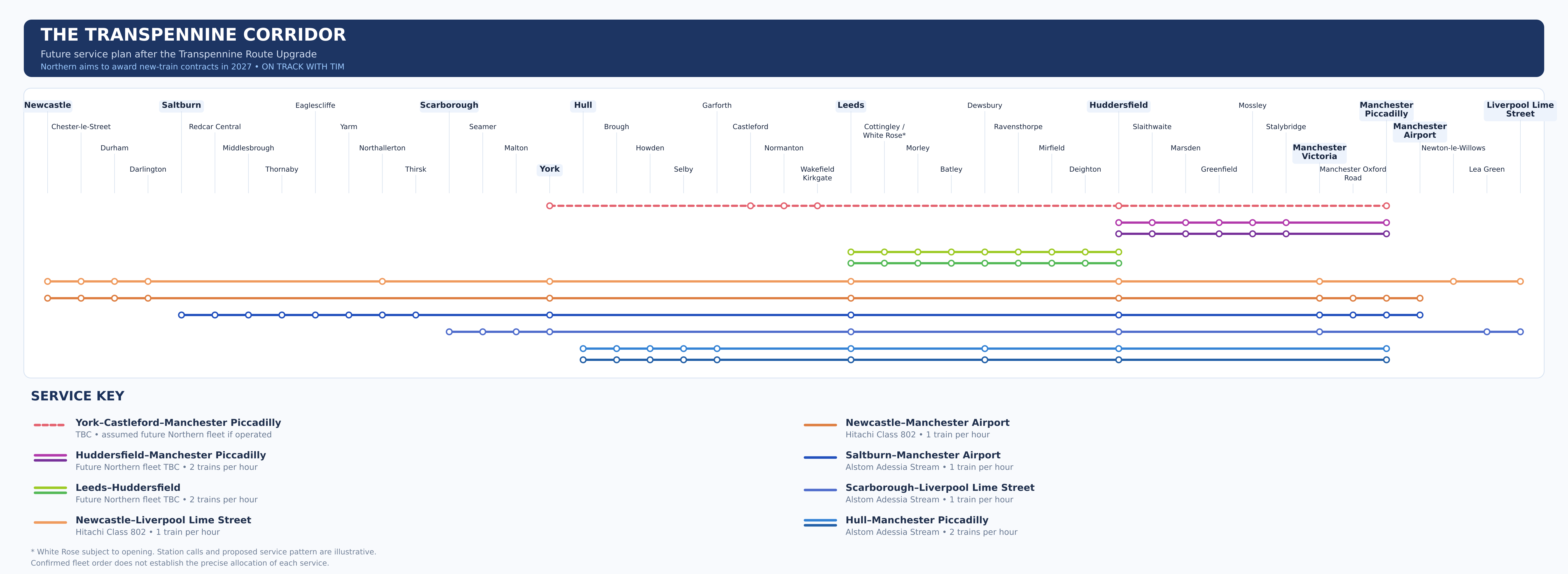
While the detailed tender submissions remain commercially confidential, the shortlisted manufacturers are publicly known and their current train platforms are well established across the UK and Europe. That allows us to examine each contender, understand the strengths of their respective designs and consider why one proposal succeeded for TransPennine Express while another may yet secure Britain’s biggest remaining rolling stock order at Northern.
Part Two of this guide examines each of the five manufacturers in detail — their train platforms, their strengths and their prospects for the Northern competition.
← Back to On Track With Tim