The Future Series
The Future of TRUMeet the Five Contenders
TPE has chosen Alstom — who will build Northern’s new trains?
In our previous articles, we explored the future timetable, TransPennine Express’s new rolling stock and how battery-electric trains could operate across the upgraded railway.
TPE’s competition now has a winner. Alstom will supply 29 five-car Adessia Stream battery-electric trains, providing 145 new carriages. Manufacturing is expected to begin in 2028, with passenger services expected from winter 2034.[1]
Attention now turns to Northern.
Alstom, CAF, Hitachi, Siemens and Stadler are the five shortlisted manufacturers. Each brings relevant technology, but their detailed proposals remain confidential. We can examine their products and experience without pretending to know what is inside their bids.
September’s InnoTrans exhibition in Berlin provided fresh evidence of how quickly that technology is developing. Battery trains are already moving beyond demonstrations into production fleets and passenger operation.
The question is which manufacturer can turn that experience into the right trains for Northern.
What Northern Needs
Northern’s programme could eventually cover up to 450 new trains. Around 130 units are expected in phase one, between 2030 and 2033. Following tender returns in March 2026, contracts are expected in 2027, subject to business-case approval.
The procurement covers three types:
| Type | Power sources | Intended flexibility |
|---|---|---|
| Electric (EMU) | Overhead electricity | Services with electrification |
| Battery-electric (BEMU) | Overhead electricity and batteries | Operation beyond the wires, supported by charging |
| Multi-mode (MMU) | Overhead electricity, diesel and a last-mile battery | Wider operation now, with conversion to electric or battery-electric later |
That last distinction matters. Northern specifies a last-mile battery for its MMUs; this should not be assumed to provide the extended off-wire capability of a dedicated BEMU.
New units will have three or four carriages. Phase one targets Classes 150, 155 and 156 and supports TRU services. Later phases aim to replace Classes 158, 323 and 333, followed by Class 170.
Northern says only about a quarter of its network is electrified. Its mix of traction reflects that infrastructure challenge.[2]
Siemens Mobility · Battery Trains Already Carrying Passengers
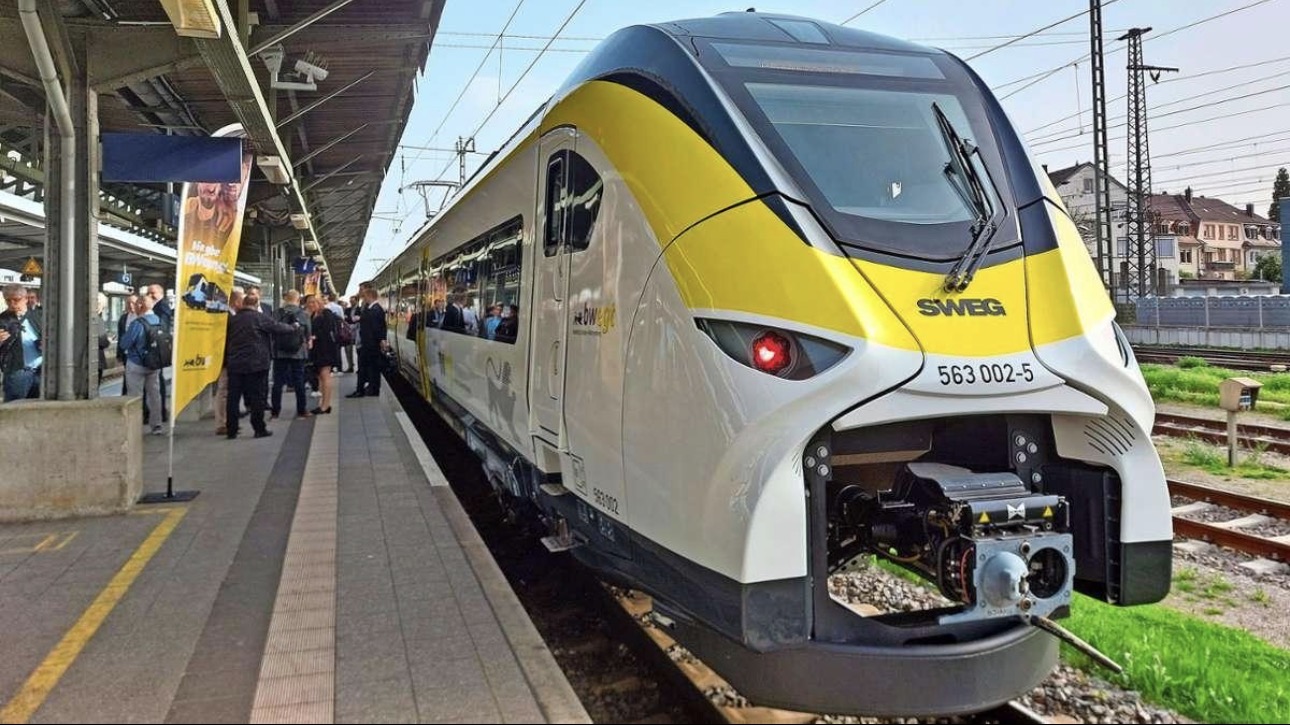
Siemens is a familiar name on Britain’s railway, including through TPE’s Class 185 fleet. For this competition, however, its battery experience deserves particular attention.
The Mireo Plus B entered regular passenger service in Germany’s Ortenau region on 8 April 2024. The first four trains were part of a 27-unit order. Siemens states an off-wire range of up to 120 kilometres, approximately 75 miles. Batteries recharge from overhead electricity and energy recovered during braking.[3]
This provides practical experience of using battery trains on a regional network, including the maintenance and charging arrangements needed to support them.
For Britain, Siemens promotes Desiro Verve, a platform designed specifically for the UK market with flexible interiors and a traction-battery option for partially electrified routes.[4]
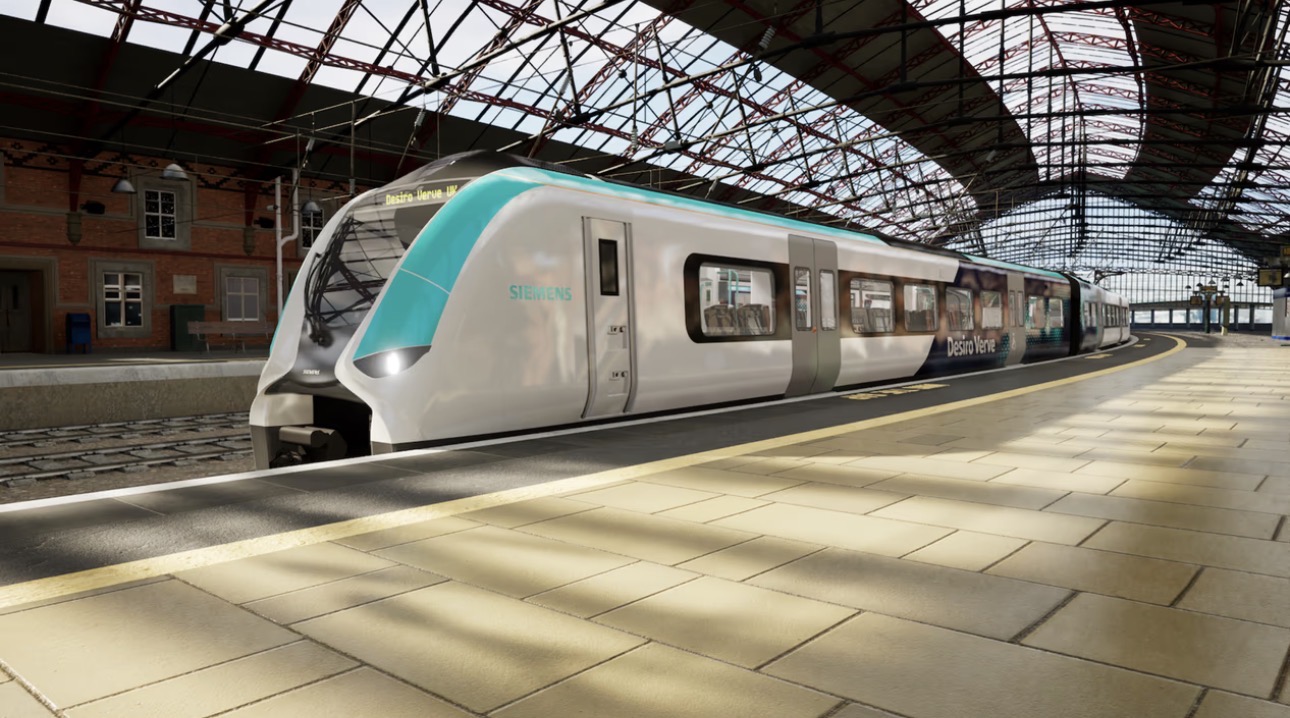
Mireo and Desiro Verve should not be treated as interchangeable designs. One demonstrates battery experience in service; the other indicates Siemens’ direction for the British market.
CAF · A Familiar Supplier With a New Battery Showcase
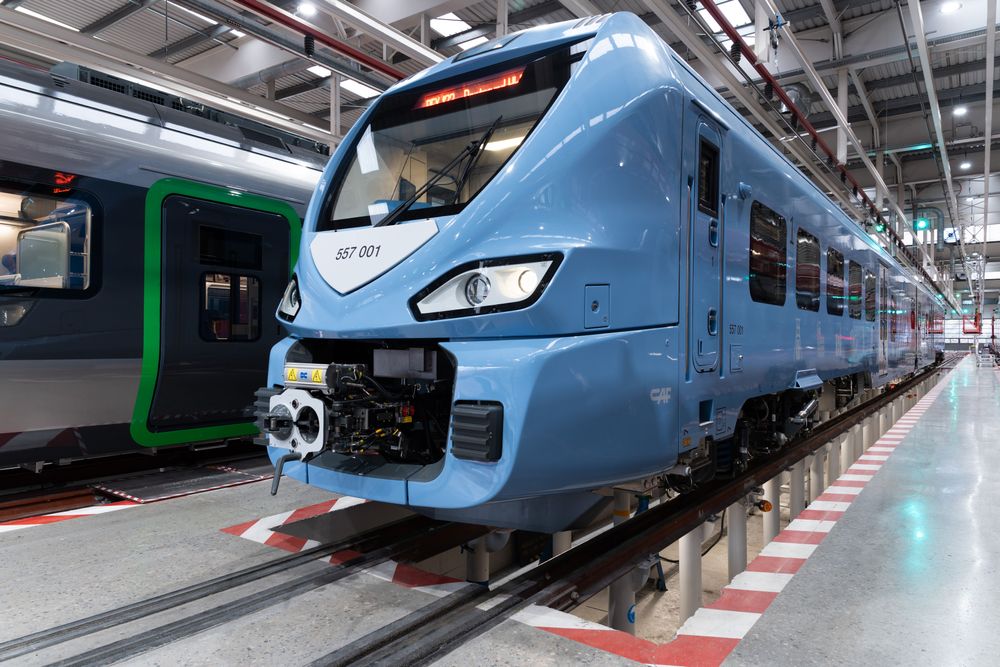
CAF already has a substantial relationship with Northern through its Class 195 diesel and Class 331 electric fleets. Its Newport factory also gives it a UK manufacturing presence.[5]
At InnoTrans 2026, CAF’s battery-electric Civity Class 557 brought another dimension to the comparison. Ahead of the exhibition, CAF announced that a production-standard Class 557 had covered 273 kilometres entirely on battery power during testing at Wildenrath in Germany — approximately 170 miles.[6]
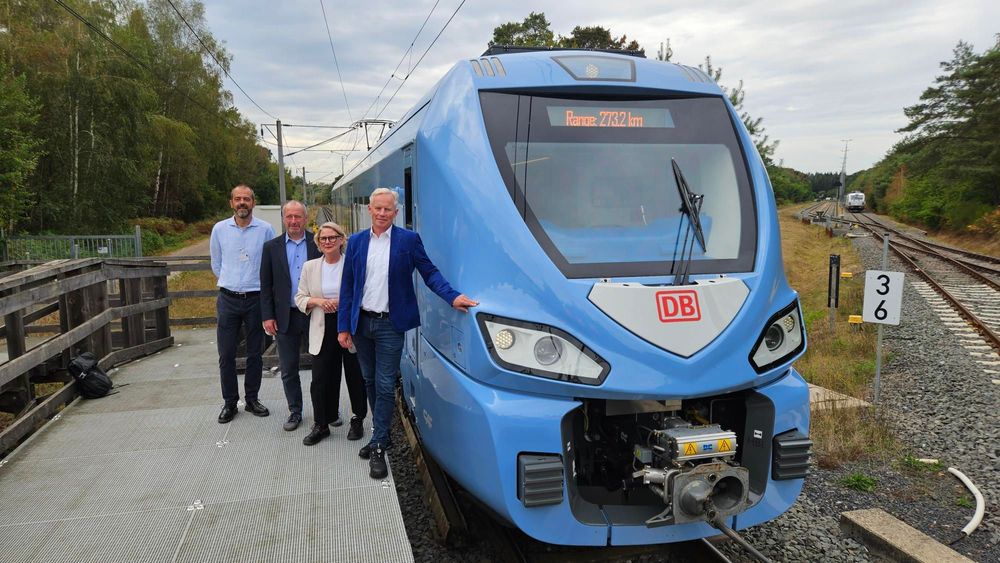
It is an impressive result, but it is a test achievement rather than a guaranteed daily operating range. A Northern service would have its own gradients, stops, passenger loads, weather conditions and energy reserves.
The significance is that CAF is developing battery capability within a regional train family, alongside its existing experience supplying Northern.
Stadler · FLIRT Akku Makes a Strong Regional Case
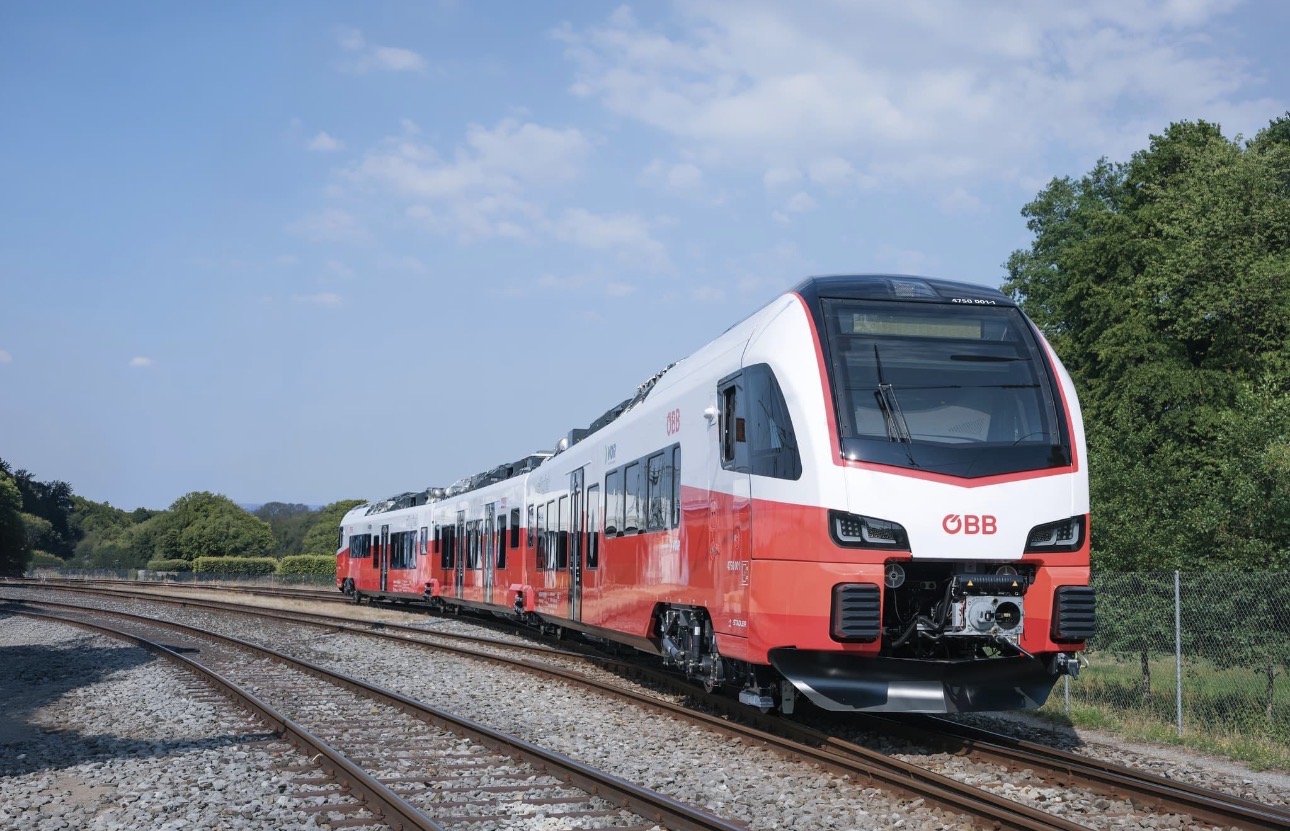
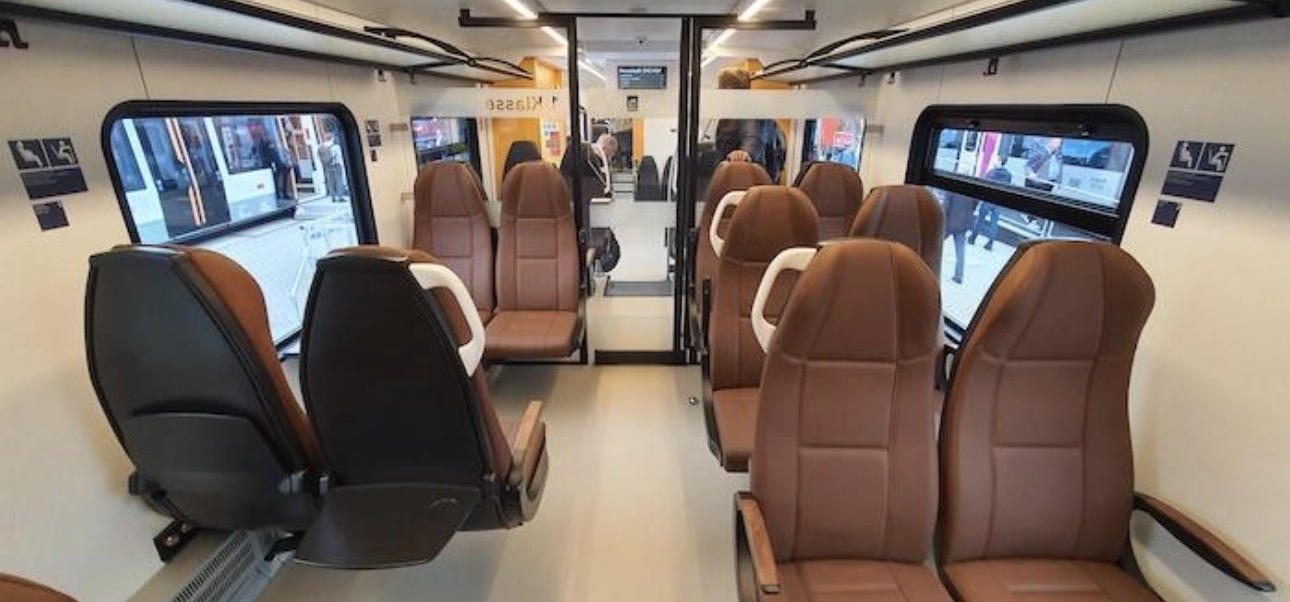
Stadler’s most directly relevant InnoTrans exhibit was the FLIRT Akku battery-electric train for Austria’s ÖBB, presented on 22 September 2026. The full-size vehicle was part of Stadler’s outdoor exhibition, giving visitors a physical example of its regional battery technology.[7]
For Northern, this is a more useful comparison than the larger long-distance and double-deck trains also attracting attention at the fair. The FLIRT Akku addresses the challenge of extending electric operation beyond continuous overhead wiring.
Hitachi Rail · The Comparison Goes Beyond Class 802
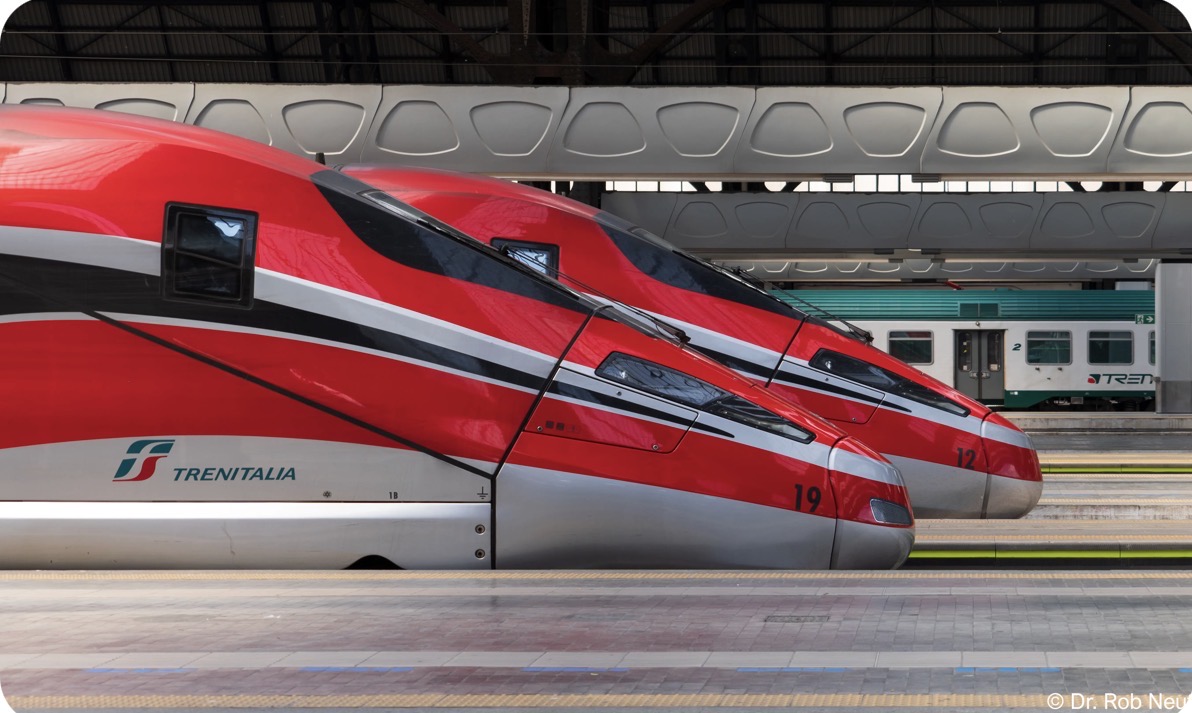
Hitachi’s British intercity experience is well established, but Northern’s competition should not be reduced to whether a smaller Class 802 could do the job.
At InnoTrans 2026, Hitachi promoted its BEMU battery-electric train, with a stated range of up to 100 kilometres, approximately 62 miles. Its published material describes double-pantograph charging, regenerative braking and batteries mounted beneath the train.[8]
The battery technology was presented at Hitachi’s exhibition stand. It should be distinguished from the full-size ETR1000 high-speed train displayed outdoors. Hitachi also markets commuter solutions using battery-electric and battery/electric/diesel arrangements.[9]
Alstom · TPE’s Winner, With More to Prove at Northern
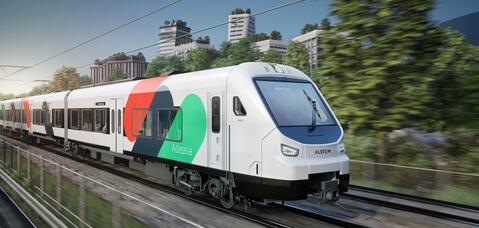
Alstom enters this comparison with a confirmed British battery-electric order. TPE’s Adessia Stream trains will be approximately 121 metres long, operate at up to 110 mph and offer around 300 seats. They will be designed, engineered, built and tested at Derby.
The programme includes charging infrastructure at Hull, Scarborough and Saltburn, linking the fleet to an operating strategy beyond the wires.[10]
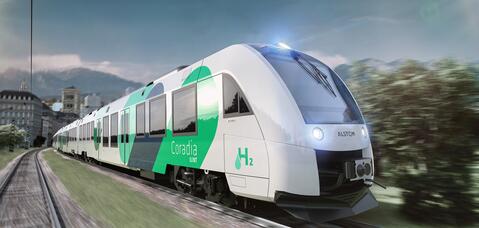
At InnoTrans 2026, Alstom also promoted a full-size Adessia Stream commuter mock-up for S-Bahn Rheinland, alongside adaptable interiors and maintenance technology.[11]
What InnoTrans Tells Us
The exhibition and current product portfolios give us a useful comparison:
| Manufacturer | Relevant evidence | Potential attraction for Northern |
|---|---|---|
| Siemens | Mireo Plus B passenger operation; UK-focused Desiro Verve | Battery experience and British-market development |
| CAF | Class 557 battery Civity and range testing | Regional battery technology and an existing supplier relationship |
| Stadler | Full-size ÖBB FLIRT Akku exhibit | A tangible regional battery platform |
| Hitachi | BEMU presentation and commuter traction options | Relevant technology beyond its intercity fleet |
| Alstom | TPE battery order and Adessia commuter mock-up | UK manufacturing and an integrated fleet programme |
These are editorial assessments of capabilities, not a ranking of the confidential tenders.
Why Battery Range Will Not Decide Everything
CAF’s 273-kilometre test, Siemens’ stated 120-kilometre range and Hitachi’s stated 100-kilometre range are not a league table. They describe different trains and different conditions. Without equivalent test methods, loads and operating assumptions, the figures cannot tell us which proposal offers Northern the best performance.
A more useful assessment would ask whether the train can complete its intended duties with sufficient reserve, recharge within the timetable and remain dependable as batteries age. It must also work when the railway is disrupted. A fleet plan needs to account for diversions, unavailable charging equipment and delays that shorten turnaround time.
Battery performance matters, but so do reliability, accessibility, maintenance, financing and delivery.
My View
All five manufacturers have relevant strengths. Siemens offers practical battery operating experience. CAF combines familiarity with Northern and new regional battery development. Stadler’s FLIRT Akku makes a clear regional case. Hitachi deserves consideration beyond its familiar intercity products. Alstom has secured a major British battery-electric programme.
Public information does not justify naming a winner.
The best proposal will be the one that fits Northern’s services as a complete system — from the platform and passenger interior to the depot and charging arrangements. For passengers, the result will be measured in everyday journeys: easier boarding, enough room and trains they can depend on.
TPE has made its choice. Northern’s decision is the next major chapter in the future of rail travel across the North.
Sources
- TransPennine Express: Our new trains are coming
- Northern: New trains programme and specification
- Siemens: Mireo Plus B enters passenger service
- Siemens: Desiro Verve
- CAF: UK operations
- CAF: Class 557 battery range test and exhibition announcement
- Stadler: FLIRT Akku at InnoTrans 2026
- Hitachi: Vehicles at InnoTrans 2026
- Hitachi: Battery-powered trains
- Alstom: TPE contract announcement
- Alstom: InnoTrans 2026